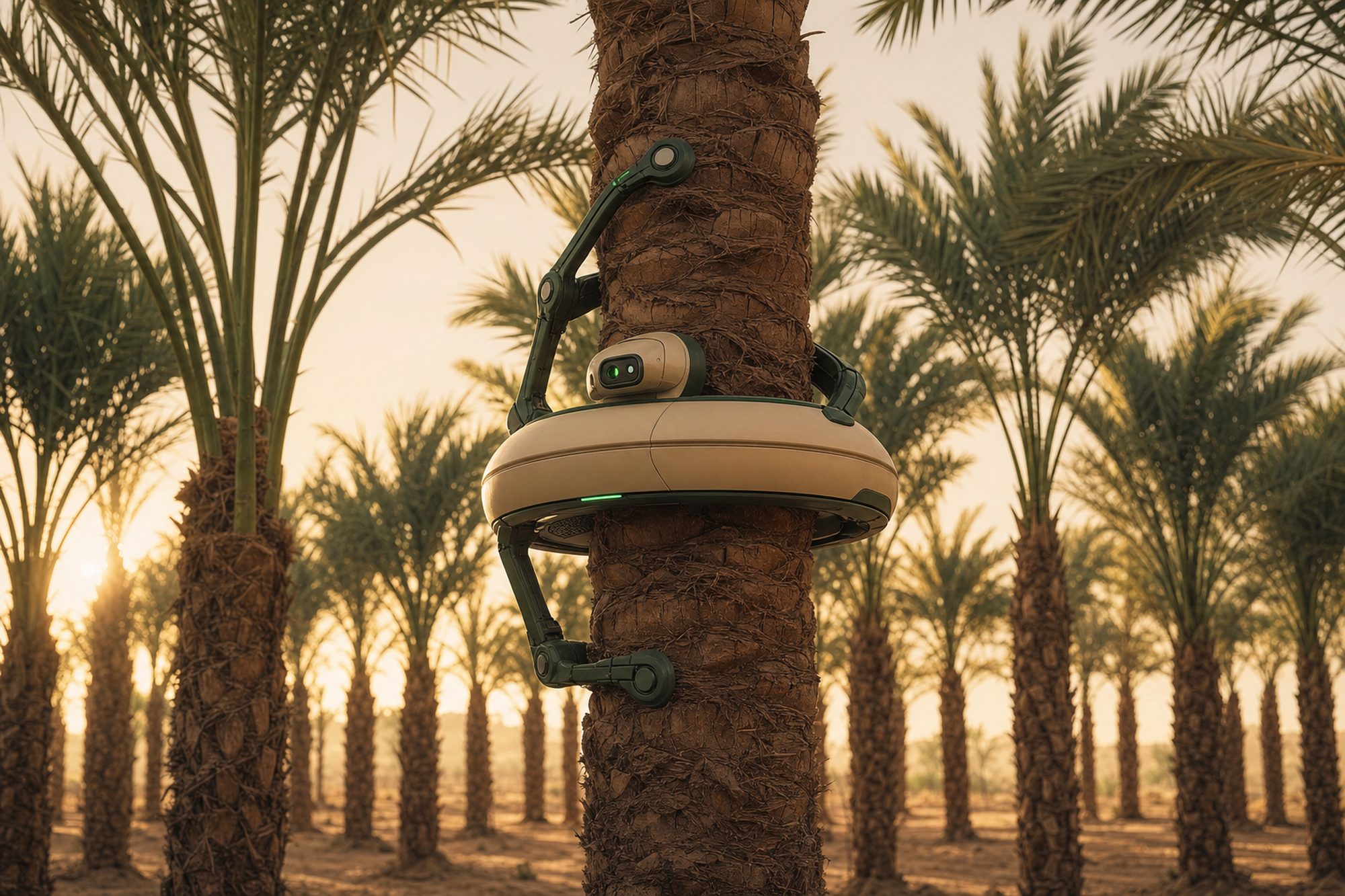
Robots that climb the palm. So no one has to.
Palmatic builds autonomous robots that pollinate and treat date palm trees — replacing a dangerous 15-metre climb with a machine that does the physical work, tree after tree.
The problem
The most critical job in the grove is still done by hand, at height.
Date palms don't pollinate themselves. Every spring, workers climb 15 to 18 metres up bare trunks to hand-place pollen into each flower cluster — and the entire crop depends on getting it done inside a two-to-three-week window.
Miss the window and yield collapses. Slip on the way up and the cost is far higher than a harvest. Meanwhile the red palm weevil bores through trunks across the region, killing mature trees from the inside long before the damage is visible from the ground.
Labour is scarce, the window is short, and the work is genuinely dangerous.
The solution
We build the hands, not just the eyes.
The market is full of sensors that tell you something is wrong with a tree. Nobody is building the machine that goes up and fixes it. Palmatic is the actuation layer for the date palm.
Autonomous pollination robot
A trunk-climbing robot that ascends to the crown, locates flower clusters, and applies pollen with consistent dosing — turning a hazardous seasonal scramble into a repeatable, logged operation.
Weevil treatment robot
The same climbing platform, a different payload: targeted treatment delivered directly to infested trees. Sensors from across the industry raise the alert — our robot acts on it.
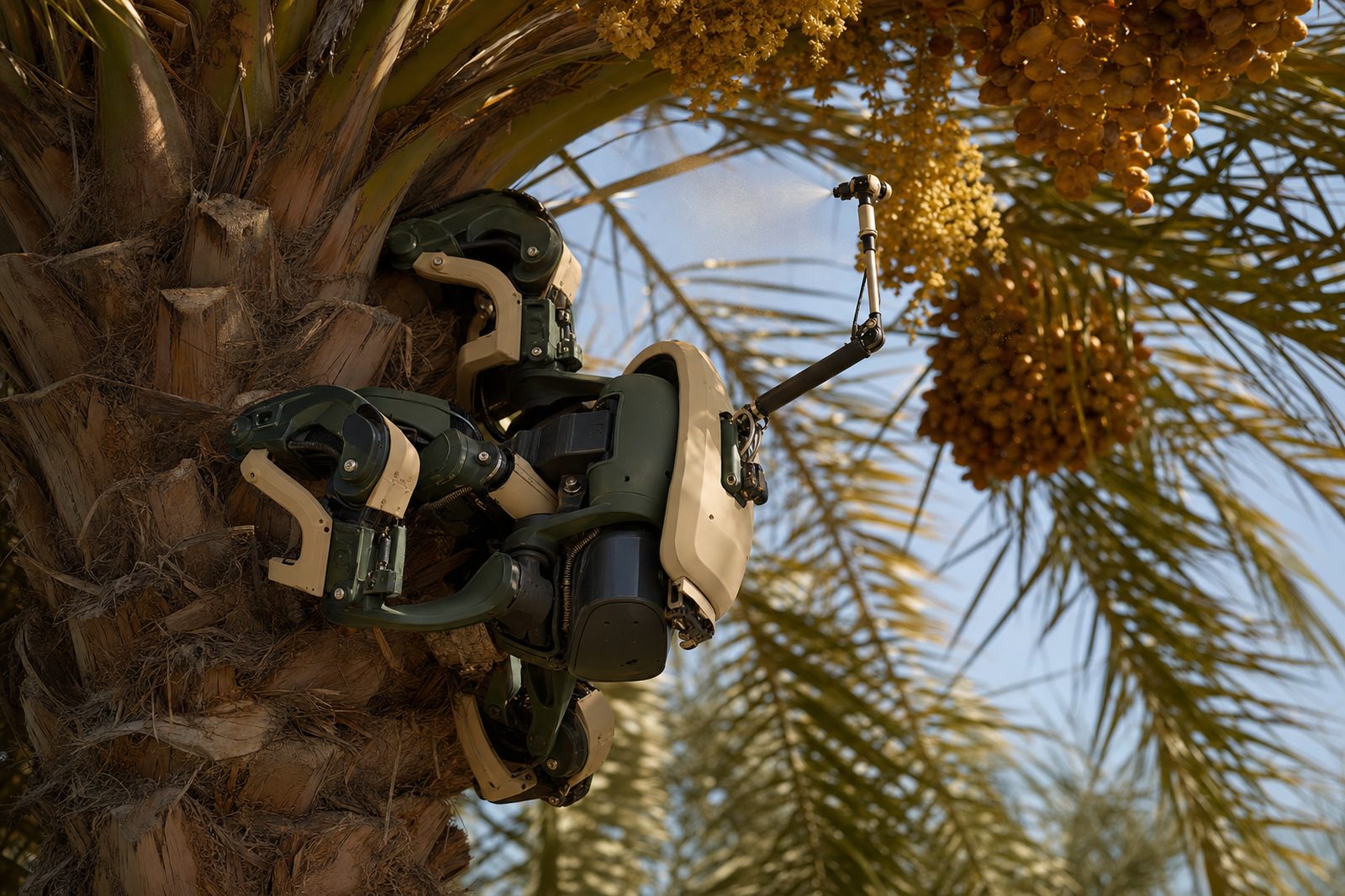
Built for the trunk
A climbing platform designed around the real geometry of a date palm — fibrous, uneven, and never the same twice.
Every tree, logged
Each visit records what was done and when — turning grove management into data instead of guesswork.
One platform, two jobs
Pollination pays for the fleet in spring. Weevil treatment keeps it working the rest of the year.

Why now
The largest palm economy on earth is modernising — and the robot seat is empty.
Saudi Arabia is home to roughly 28 million date palms, and Vision 2030 is pushing billions into agricultural modernisation. Detection startups have already proven that growers will adopt technology. What's missing is the machine that does the physical work — and no dominant Saudi robotics player has claimed it.
Founder
Hatem Alruwais
Founder & CEO
A Saudi robotics builder who represented Saudi Arabia at the FIRST Global Challenge 2025 in Panama, placing first in the Middle East among more than 140 competing nations. He also founded Future Leaders Organization, a nonprofit teaching robotics and AI to young people across the Kingdom.
Palmatic comes out of that same instinct: build the machine that actually does the work, and build it here.
Get in touch
Growers, partners, and investors — we'd like to hear from you.
Whether you manage a grove, build in agri-tech, or want to back the actuation layer for the date palm, the fastest way to reach us is a direct email.
[email protected]